10 jul 2020

Tarragona Devilsbridge


An ellipsis is an apparent break-in natural time continuity as it is implied in the film's story. The simplest way to maintain temporal continuity is to shoot and use all action involved in the story's supposed duration whether it is pertinent or not. It would also be necessary to shoot the whole film in one take to keep from having to edit together different shots, causing the viewer's temporal disorientation. However, in a story that is to occupy long periods of time, a viewer would have to spend too long watching the film. So although in many cases the ellipsis would prove necessary, elimination of it altogether would best preserve any film's temporal continuity. 

9 jul 2020

Projectoscope


Vitascope was an early film projector first demonstrated in 1895 by Charles Francis Jenkins and Thomas Armat. They had made modifications to Jenkins patented Phantoscope, which cast images via film and electric light onto a wall or screen. The Vitascope is a large electrically-powered projector that uses light to cast images. The images being cast are originally taken by a kinetoscope mechanism onto gelatin film. Using an intermittent mechanism, the film negatives produced up to fifty frames per second. The shutter opens and closes to reveal new images. This device can produce up to 3,000 negatives per minute. With the original Phantoscope and before he partnered with Armat, Jenkins displayed the earliest documented projection of a filmed motion picture in June 1894 in Richmond, Indiana.

8 jul 2020

Coal mining in the Netherlands 1100-1974

Cross-cutting is an editing technique most often used in films to establish action occurring at the same time, and usually in the same place. In a cross-cut, the camera will cut away from one action to another action, which can suggest the simultaneity of these two actions but this is not always the case. Cross-cutting can also be used for characters in a film with the same goals but different ways of achieving them.


Working of Polaroid


Polaroid Originals, more recently just Polaroid, is a Dutch photography company and manufacturer founded in 2008 by Florian Kaps, AndrĂ© Bosman and Marwan Saba. It manufactures its own cameras, the Impossible I-1, the OneStep 2, the OneStep+, modelled on the original Polaroid OneStep Land Camera, the i-Type instant film for its original cameras, and instant film for select Polaroid Corporation instant cameras. 


7 jul 2020

The Good the Bad the Ugly


What we think of as "film music" today is a creation of only a few inventive and original composers, one fewer of whom walks the Earth as of yesterday. Though Ennio Morricone will be remembered first for his association with spaghetti western master Sergio Leone, his career in film scores spanned half a century and encompassed work for some of the most acclaimed directors of that period: his countrymen like Michelangelo Antonioni, Bernardo Bertolucci, Pier Paolo Pasolini, but also such commanding Hollywood filmmakers as John Huston, Terrence Malick, and Quentin Tarantino. Morricone didn't just write music to add to their films; he became a collaborator, without whose work their films would be difficult to imagine.

6 jul 2020

Dutch pics


Film, also called movie, motion picture or moving picture, is a visual art-form used to simulate experiences that communicate ideas, stories, perceptions, feelings, beauty, or atmosphere through the use of moving images. These images are generally accompanied by sound, and more rarely, other sensory stimulations. The word "cinema," short for cinematography, is often used to refer to filmmaking and the film industry, and to the art form that is the result of it.


5 jul 2020

Pulpit Rock


Cross-cutting is an editing technique most often used in films to establish action occurring at the same time, and usually in the same place. In a cross-cut, the camera will cut away from one action to another action, which can suggest the simultaneity of these two actions but this is not always the case. Cross-cutting can also be used for characters in a film with the same goals but different ways of achieving them.
Suspense may be added by cross-cutting. It is built through the expectations that it creates and in the hopes that it will be explained with time. Cross-cutting also forms parallels; it illustrates a narrative action that happens in several places at approximately the same time

4 jul 2020

Moscow


The cinema of Russia began in the Russian Empire, widely developed in the Soviet Union and in the years following its dissolution, the Russian film industry would remain internationally recognized. In the 21st century, Russian cinema has become popular internationally with hits such as House of Fools, Night Watch and Brother. The Moscow International Film Festival began in Moscow in 1935. The Nika Award is the main annual national film award in Russia.


3 jul 2020

To the circus


An ellipsis is an apparent break-in natural time continuity as it is implied in the film's story. The simplest way to maintain temporal continuity is to shoot and use all action involved in the story's supposed duration whether it is pertinent or not. It would also be necessary to shoot the whole film in one take to keep from having to edit together different shots, causing the viewer's temporal disorientation. However, in a story that is to occupy long periods of time, a viewer would have to spend too long watching the film. So although in many cases the ellipsis would prove necessary, elimination of it altogether would best preserve any film's temporal continuity.


2 jul 2020

Dutch Dolmen


Start your voyage of discovery at the Hunebed Centre in Borger with a special Geopark De Hondsrug exhibition about the Ice Ages and prehistory. The exhibition also tells the unique story of the Hondsrug region – four ridges which stretch for many kilometres as straight lines through the Drenthe landscape. You will learn how the Hondsrug was created by ice and meltwater. How polar winds transformed the region into an ice-cold wilderness.


1 jul 2020

Door to Door: wake-up call


A "buffer shot" is a film technique of inserting a shot into a film to disguise a mistake, or a cut. Buffer shots are often known as "cheat shots."
For example, if Character A is talking to Character B and the microphone is briefly in shot while Character A is talking, the editor could insert a shot of Character B listening or reacting, to cover up the mistake.

19 jun 2020

Berliner Tor


Film studies is an academic discipline that deals with various theoretical, historical, and critical approaches to films. It is sometimes subsumed within media studies and is often compared to television studies. Film studies is less concerned with advancing proficiency in film production than it is with exploring the narrative, artistic, cultural, economic, and political implications of the cinema. In searching for these social-ideological values, film studies takes a series of critical approaches for the analysis of production, theoretical framework, context, and creation. In this sense the film studies discipline exists as one in which the teacher does not always assume the primary educator role; the featured film itself serves that function.

18 jun 2020

REEL - UNREEL

                                §
In Francis AlĂ¿s’s video REEL-UNREEL, the action takes place along the bare cityscape of Kabul, Afghanistan. The cameras follow a reel of film as it unrolls through the old part of town—pushed by two children, uphill and downhill, like a hoop, inspiring an improvised narrative. It’s an example of “doing/undoing,” AlĂ¿s says. And that interplay became the axiom of the film.

16 jun 2020

Festival


Experimental filmmakers generally begin as amateurs, and some used experimental films as a springboard into commercial film making or transitioned into academic positions. The aim of experimental filmmaking is usually to render the personal vision of an artist, or to promote interest in new technology rather than to entertain or to generate revenue, as is the case with commercial films.


15 jun 2020

Anchovy fishing


A sound blimp is a housing attached to a camera which reduces the sound caused by the shutter click, particularly SLRs. It is primarily used in film still photography, so as not to interfere with the shooting of principal photography, and also in other situations where sound is distracting: theatrical photography, surveillance, and wildlife photography.


14 jun 2020

Eifel


In 2013, it was estimated that 92% of movie theatres in the United States had converted to digital, with 8% still playing film.
Although usually more expensive than film projectors, high-resolution digital projectors offer many advantages over traditional film units. For example, digital projectors contain no moving parts except fans, can be operated remotely, are relatively compact and have no film to break, scratch or change reels of. They also allow for much easier, less expensive, and more reliable storage and distribution of content. All-electronic distribution eliminates all physical media shipments. There is also the ability to display live broadcasts in theaters equipped to do so.

11 jun 2020

Filming Nature


A nature documentary or wildlife documentary is a genre of documentary film or series about animals, plants, or other non-human living creatures, usually concentrating on video taken in their natural habitat but also often including footage of trained and captive animals. Sometimes they are about wildlife or ecosystems in relationship to human beings. Such programmes are most frequently made for television, particularly for public broadcasting channels, but some are also made for the cinema medium. The proliferation of this genre occurred almost simultaneously alongside the production of similar television series. 


Magic Lantern Slides

Magic lantern slides brought the world to life in pictures. The first lantern slides were created in the 1600s, around 200 years before photography was invented and they provided spectacular entertainment and education in the way that cinema does today. The first slides were made by painting images on to small pieces of glass and people viewed the slides by shinning candlelight or gaslight through them. 


10 jun 2020

David Lynch Teaches Creativity and Film

 
Now online education company MasterClass has made some of his knowledge easily accessible in the form of their new course "David Lynch Teaches Creativity and Film." In Lynch's world — unlike Hollywood in general — you can't make a film without creativity. But of what does creativity consist? "Ideas are everything," says Lynch


9 jun 2020

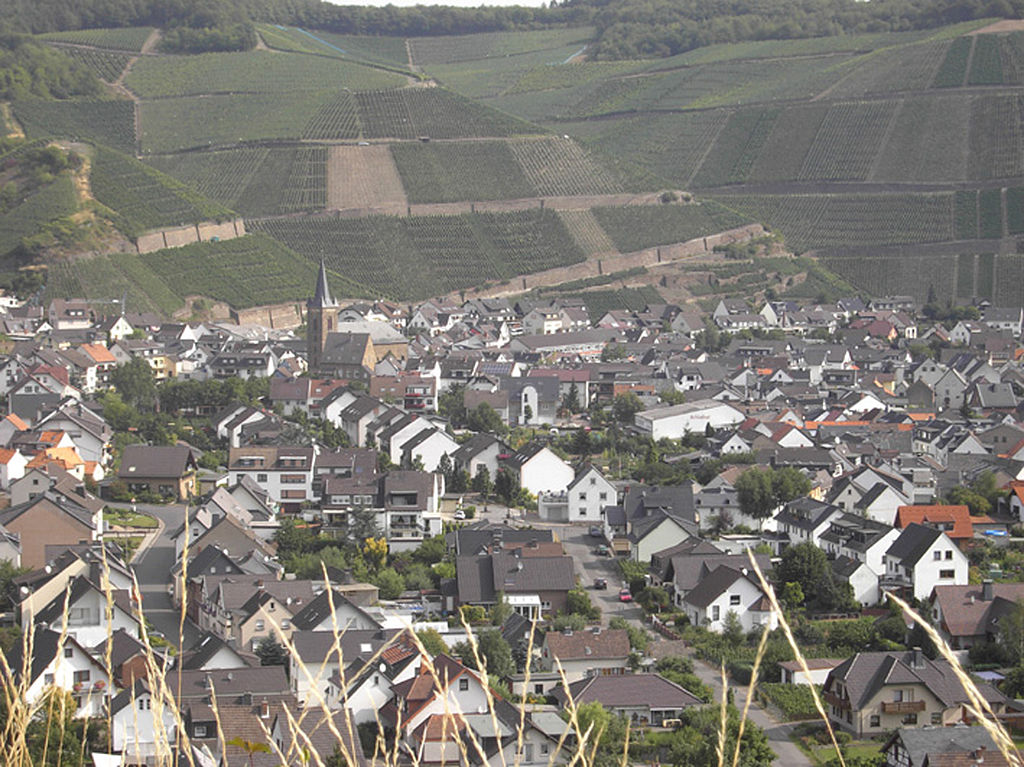
Ahr Valley


Filmmaking involves a number of discrete stages including an initial story, idea, or commission, through scriptwriting, casting, shooting, editing, and screening the finished product before an audience that may result in a film release and exhibition.