14 jun 2020
Eifel
In 2013, it was estimated that 92% of movie theatres in the United States had converted to digital, with 8% still playing film.
Although usually more expensive than film projectors, high-resolution digital projectors offer many advantages over traditional film units. For example, digital projectors contain no moving parts except fans, can be operated remotely, are relatively compact and have no film to break, scratch or change reels of. They also allow for much easier, less expensive, and more reliable storage and distribution of content. All-electronic distribution eliminates all physical media shipments. There is also the ability to display live broadcasts in theaters equipped to do so.
11 jun 2020
Filming Nature
A nature documentary or wildlife documentary is a genre of documentary film or series about animals, plants, or other non-human living creatures, usually concentrating on video taken in their natural habitat but also often including footage of trained and captive animals. Sometimes they are about wildlife or ecosystems in relationship to human beings. Such programmes are most frequently made for television, particularly for public broadcasting channels, but some are also made for the cinema medium. The proliferation of this genre occurred almost simultaneously alongside the production of similar television series.
Magic Lantern Slides
Magic lantern slides brought the world to life in pictures. The first lantern slides were created in the 1600s, around 200 years before photography was invented and they provided spectacular entertainment and education in the way that cinema does today. The first slides were made by painting images on to small pieces of glass and people viewed the slides by shinning candlelight or gaslight through them.
10 jun 2020
David Lynch Teaches Creativity and Film
9 jun 2020
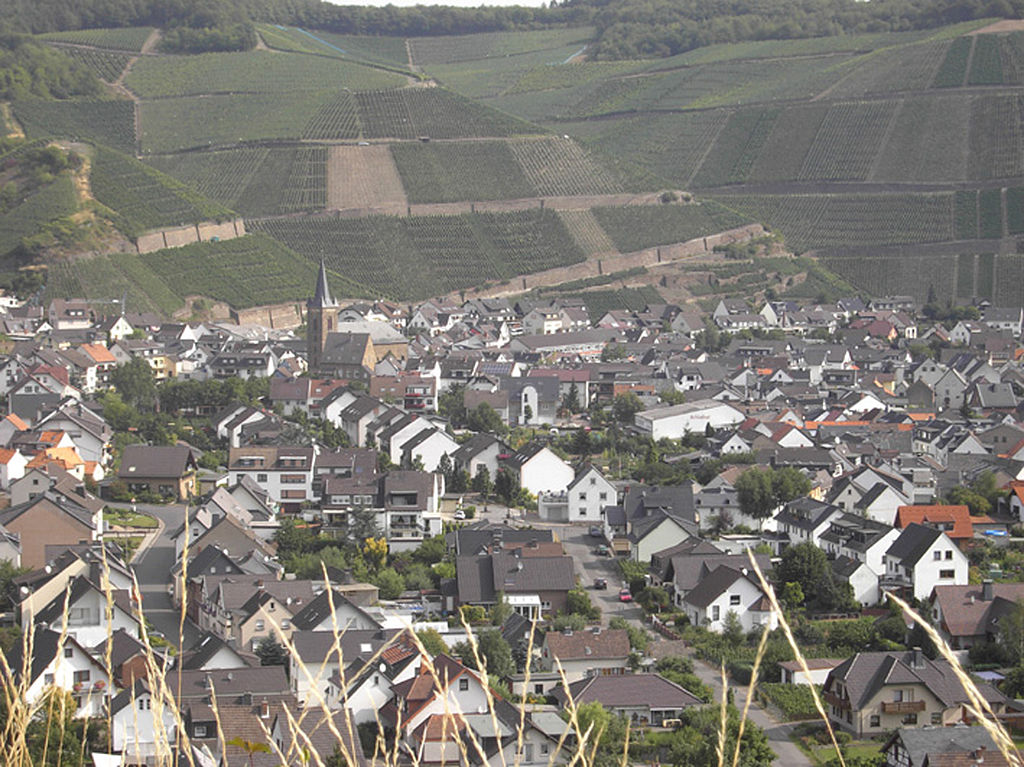
Ahr Valley
Filmmaking involves a number of discrete stages including an initial story, idea, or commission, through scriptwriting, casting, shooting, editing, and screening the finished product before an audience that may result in a film release and exhibition.
Groningen across
A film transition is a technique used in the post-production process of film editing and video editing by which scenes or shots are combined. Most commonly this is through a normal cut to the next shot. Most films will also include selective use of other transitions, usually to convey a tone or mood, suggest the passage of time, or separate parts of the story. These other transitions may include dissolves, L cuts, fades (usually to black), match cuts, and wipes.
8 jun 2020
Editing Nostalgia
Before the widespread use of digital non-linear editing systems, the initial editing of all films was done with a positive copy of the film negative called a film workprint (cutting copy in UK) by physically cutting and splicing together pieces of film. Strips of footage would be hand cut and attached together with tape and then later in time, glue. Editors were very precise; if they made a wrong cut or needed a fresh positive print, it cost the production money and time for the lab to reprint the footage. Additionally, each reprint put the negative at risk of damage. With the invention of a splicer and threading the machine with a viewer such as a Moviola, or "flatbed" machine such as a K.-E.-M. or Steenbeck, the editing process sped up a little bit and cuts came out cleaner and more precise.
Delfzijl
A shot in which the camera moves alongside or parallel to its subject. Traditionally tracking shots are filmed while the camera is mounted on a track dolly and rolled on dedicated tracks comparable to railroad tracks, In recent years, however, parallel camera moves performed with a Steadicam, gimbal, etc. may also be called a tracking shot. Tracking shots often "follow" a subject while it is in motion: for instance, a person walking on a sidewalk seen from the perspective of somebody walking on a parallel path several feet away. Shots taken from moving vehicles that run parallel to another moving object are also referred to as tracking or traveling shots. A tracking shot may also be curved, moving around its subject in a semi-circular rotation, known specifically as an arc or arc shot.
6 jun 2020
The North: Norway & Sweden
5 jun 2020
Groningen City
.
4 jun 2020
Islanders from Marken
An interview is essentially a structured conversation where one participant asks questions, and the other provides answers. In common parlance, the word "interview" refers to a one-on-one conversation between an interviewer and an interviewee. The interviewer asks questions to which the interviewee responds, usually so information is offered by the interviewee to interviewer -- and that information may be used or provided to other audiences, whether in real time or later. This feature is common to many types of interviews -- a job interview or interview with a witness to an event may have no other audience present at the time, but the answers will be later provided to others in the employment or investigative process.
An interview may also transfer "information" or answers in both directions.
Tourism terror
The Disadvantages of Tourism. Environmental. Tourism can often cause environmental damage with risks like erosion, pollution, the loss of natural habitats, and forest fires. Even if tourists behave responsibly, the sheer number of them can cause damage.
3 jun 2020
Wadden Sea
A nature documentary or wildlife documentary is a genre of documentary film or series about animals, plants, or other non-human living creatures, usually concentrating on video taken in their natural habitat but also often including footage of trained and captive animals. Sometimes they are about wildlife or ecosystems in relationship to human beings. Such programmes are most frequently made for television, particularly for public broadcasting channels, but some are also made for the cinema medium. The proliferation of this genre occurred almost simultaneously alongside the production of similar television series.
2 jun 2020
Shrimp village
Cinephilia (/ˌsɪnɪˈfɪliə/; also cinemaphilia or filmophilia) is the term used to refer to a passionate interest in films, film theory, and film criticism. The term is a portmanteau of the words cinema and philia, one of the four ancient Greek words for love. A person with a passionate interest in cinema is called a cinephile (/ˈsɪnɪfaɪl/), cinemaphile, filmophile, or, informally, a film buff (also movie buff).
In English, "cinephile" is sometimes used interchangeably with the word cineaste (/ˈsɪniæst, ˈsɪneɪæst/), though in the original French the term cinéaste ([sineast]) refers to a cinephile who is also a filmmaker.
28 mei 2020
Uganda
Oil has been found in the poverty-stricken African country of Uganda. Much of the oil is located under protected natural parks that provide water and food for people and animals. The French oil company Total is driving people from their land to access that oil. Total's investments are protected by an investment treaty between the Netherlands and Uganda. And that protection makes Total supreme. People, animals and the environment are the victims of this.
25 mei 2020
We & Finland
22 mei 2020
Inland navigation
A screenplay, or script, is a written work by screenwriters for a film, television program, or video game. These screenplays can be original works or adaptations from existing pieces of writing. In them, the movement, actions, expression and dialogues of the characters are also narrated. A screenplay written for television is also known as a teleplay.
The format is structured so that one page equates to roughly one minute of screen time, though this is only used as a ballpark estimate and often bears little resemblance to the running time of the final movie. The standard font is 12 point, 10 pitch Courier Typeface.
The major components are action (sometimes called "screen direction") and dialogue. The action is written in the present tense and is limited to what can be heard or seen by the audience, for example descriptions of settings, character movements, or sound effects. The dialogue is the words the characters speak, and is written in a center colum
Paris & Us
Super 8mm film is a motion picture film format released in 1965 by Eastman Kodak as an improvement over the older "Double" or "Regular" 8 mm home movie format.
Unlike Super 35 (which is generally compatible with standard 35mm equipment), the film stock used for Super 8 is not compatible with standard 8 mm film cameras.
There are several varieties of the film system used for shooting, but the final film in each case has the same dimensions. The most popular system by far was the Kodak system.
18 mei 2020
Solarcar race
A sports film is a film genre that uses sport as the theme of the film. It is a production in which a sport, sporting event, athlete (and their sport), or follower of sport (and the sport they follow) are prominently featured, and which depend on sport to a significant degree for their plot motivation or resolution. Despite this, sport is ultimately rarely the central concern of such films and sport performs primarily an allegorical role. Furthermore, sports fans are not necessarily the target demographic in such movies, but sports fans tend to have a large following or respect for such movies.
17 mei 2020
360 Amsterdam
On rare occasions, 360° panoramic movies have been constructed for specially designed display spaces—typically at theme parks, world's fairs, and museums. Starting in 1955, Disney has created 360° theaters for its parks[18] and the Swiss Transport Museum in Lucerne, Switzerland, features a theatre that is a large cylindrical space with an arrangement of screens whose bottom is several metres above the floor. Panoramic systems that are less than 360° around also exist. For example, Cinerama used a curved screen and IMAX Dome / OMNIMAX movies are projected on a dome above the spectators.